Genuine reviews and quality experiences.
Sunlu Filament Review 2025: Is This Budget 3D Printing Brand Worth It?
If you've been shopping for 3D printing filament without wanting to spend a fortune, Sunlu has almost certainly appeared in your search results. The Chinese brand has become one of the most recognisable names in the budget filament space — stocking everything from standard PLA and PETG to exotic silk, rainbow, and specialty materials. But with so many mixed reviews floating around online, is Sunlu actually worth buying in 2025? We dug into the full range, tested real-world performance, and gathered community feedback so you don't have to.
What Is Sunlu?
Sunlu (officially SUNLU Technology Co., Ltd.) is a Shenzhen-based manufacturer founded in 2013, specialising in 3D printing consumables and accessories. The brand sells a remarkably wide catalogue: PLA, PLA+, PETG, ABS, TPU, ASA, silk PLA, rainbow PLA, high-speed variants, and an expanding range of accessories including their well-regarded filament dryers. Products are sold globally through Amazon, AliExpress, their own website, and various regional retailers.
The brand markets itself on three pillars: low price, broad material selection, and tight dimensional tolerances. On paper, a tolerance of ±0.02mm and vacuum-sealed packaging with desiccant sounds like premium treatment at budget pricing. In practice, the reality is a little more nuanced.
Print Quality: What to Expect
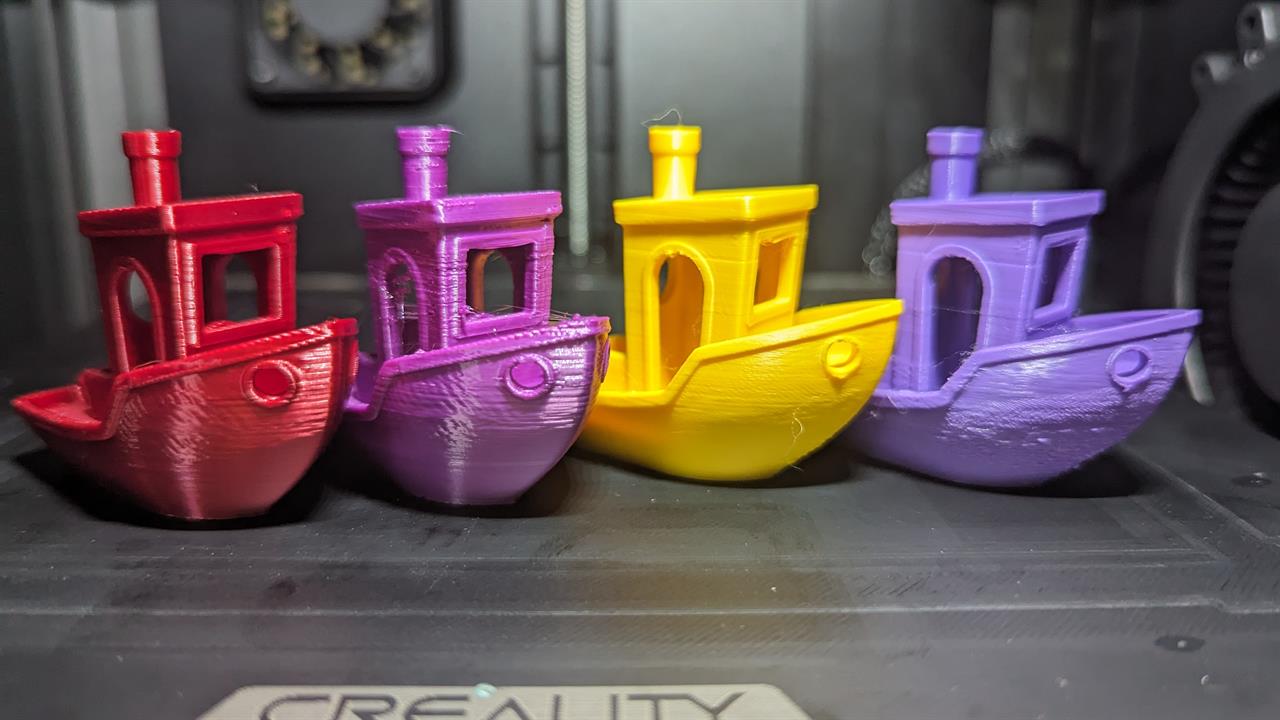
When Sunlu filament is good, it is genuinely very good for the price. Their standard PLA consistently delivers clean layer lines, vibrant colours, and smooth extrusion on a wide range of printers — from budget Creality machines to faster Bambu Lab setups. Experienced users report printing 50kg or more of Sunlu material with reliable results across PLA, PETG, and ABS variants. Dimensional accuracy holds up well in most batches, which matters for functional prints requiring tight tolerances on snap fits or thread profiles.
Their silk PLA range is a particular highlight. The semi-gloss surface finish produces visually striking results with almost no additional effort, and the rainbow silk variant cycles through five colours across every 15 metres of filament — excellent for large decorative prints, less predictable on small objects where a single colour may dominate.
https://www.sunlu.com — Shop Sunlu PLA filament on Amazon
Where Sunlu Falls Short
The most common complaint about Sunlu — and it appears frequently across Reddit threads, maker forums, and review platforms — is batch inconsistency. When a batch is good, users are happy. When it isn't, problems include blobs, rough surface finishes, stringing that resists tuning, and in some cases spool tangles mid-print. Standard PLA can be particularly prone to stringing and minor over-extrusion if print temperatures aren't dialled in carefully; PLA+ generally performs more consistently but requires slightly higher temperatures.
Cardboard spools — while eco-friendly — have been reported to arrive slightly crushed after shipping, occasionally causing wobble in enclosed AMS systems. More significantly, Sunlu's customer support receives consistently poor marks: slow response times, strict return policies, and low resolution rates for faulty orders. Multiple community members recommend purchasing through Amazon or other marketplaces with strong buyer protection rather than direct from Sunlu's own store.
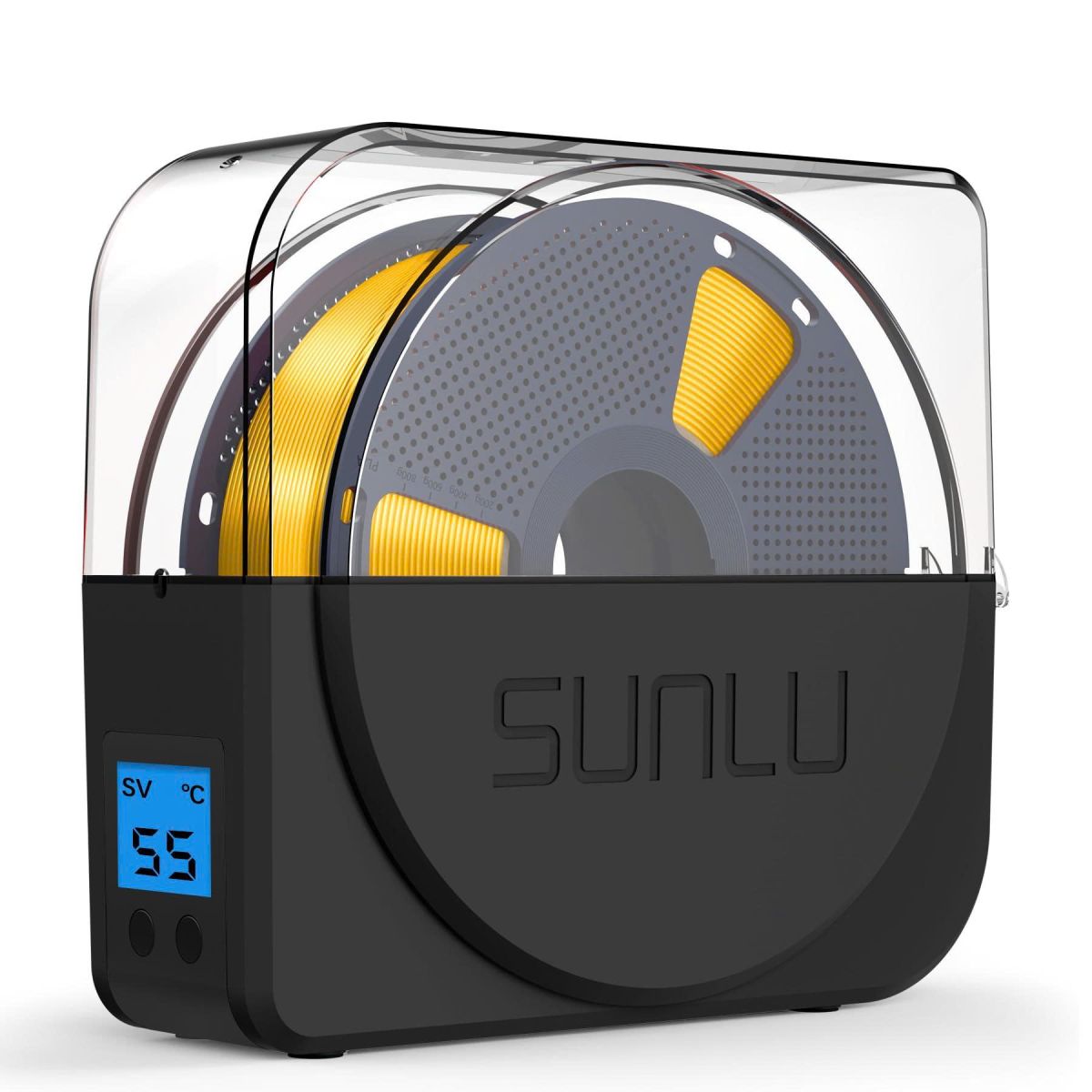
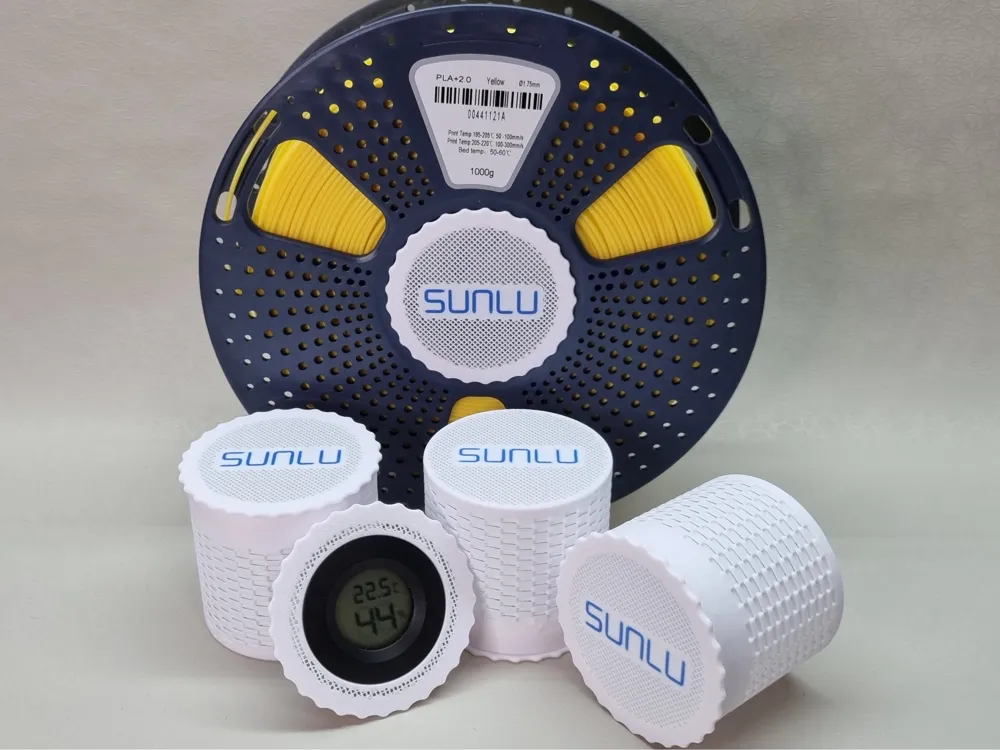
Moisture sensitivity is also worth flagging. Like most PLA and ABS materials, Sunlu filament absorbs humidity and degrades in quality if left exposed. Brittle prints and popping sounds during extrusion are telltale signs. The fix is straightforward — dry filament at 45–55°C for four to six hours before use — and Sunlu's own S2 FilaDryer handles this well. But it's an extra step budget-brand buyers sometimes don't anticipate.
The Sunlu Accessories Range
Sunlu has expanded meaningfully beyond filament. Their filament dryers (the S1 and S2 models) are widely praised as solid, affordable tools that genuinely extend filament life. The Sunlu Filament Connector — a device that fuses filament ends together — appeals to waste-conscious makers who want to use every gram from a spool or create multicolour prints without a multi-extruder setup. These accessories add real value to the Sunlu ecosystem for committed users.

https://www.sunlu.com — Browse Sunlu filament dryers and accessories
Pricing and Value
This is where Sunlu makes its strongest case. Standard PLA typically retails at $12–15 per kg, with PETG coming in around $14–18 per kg. Multi-pack bundles of three to five spools bring the per-kg cost down further — 10–15% savings are common. For high-volume hobbyists, prototypers, or anyone printing functional parts where appearance is secondary to function, the cost-per-kg argument is genuinely compelling. The trade-off is accepting occasional batch variation and being prepared to tune print settings per-spool rather than setting and forgetting.
Who Is Sunlu Best For?
Sunlu is an excellent choice for experienced 3D printing hobbyists who are comfortable adjusting print settings, prototypers who need large volumes of material at low cost, and makers looking for decorative or creative filament types (silk, rainbow, multicolour) without paying premium prices. It's less suited to beginners who want a set-and-forget experience, or anyone who needs guaranteed batch-to-batch colour consistency for multi-part matched prints.
Verdict
Sunlu sits in an honest middle ground: better than its cheapest competitors when a batch is right, not as consistent as premium options like Prusament or Polymaker. For budget-conscious makers who know their way around a slicer, it delivers strong value — particularly on PLA, silk variants, and accessories. Go in with realistic expectations, buy through a platform with easy returns, and keep your filament dry. Do that, and Sunlu earns its place on the shelf.

https://www.sunlu.com — Shop the full Sunlu filament range — PLA, PETG, silk and more
Popular Blog