Genuine reviews and quality experiences.
Is DwarfLab Worth It? An Honest Brand Review of the Best Smart Telescope Maker in 2025
If you've ever dreamed of photographing distant galaxies and glowing nebulae without spending thousands of dollars or years mastering complex gear, DwarfLab has probably caught your eye. This tech-forward company has quietly disrupted the amateur astronomy world by building smart telescopes that virtually anyone can use — right out of the box, controlled from a smartphone. But is DwarfLab actually worth your money in 2025? In this in-depth brand review, we cover every model, real-world performance, app experience, and who should buy one.
Smart telescopes combine a telescope, digital camera, automated star-tracking, and AI-powered image stacking into one compact unit. The idea is elegantly simple: point the device at the sky, connect your phone, and let the software do the heavy lifting. No manual focusing, no complicated polar alignment, no darkroom processing required. DwarfLab has become one of the top names in this rapidly growing space, with a lineup that now spans three distinct products across a wide price range.
## What Is DwarfLab?
DwarfLab is a technology company specialising in "smart telescopes" — devices that merge optics, sensors, motorised mounts, onboard computers, and mobile apps into one seamless system. Founded with the mission of making astrophotography accessible to everyone, DwarfLab has released three generations of products, each more capable than the last. Their telescopes are controlled entirely via the DWARFLAB app (available on both iOS and Android) and require no prior astronomy knowledge to operate.
The company has built a passionate community of users who share images of nebulae, galaxies, and solar events captured with DwarfLab hardware — images that would have required tens of thousands of dollars and years of expertise just a decade ago. Today, you can get those same results for under $600.
## The DwarfLab Lineup: DWARF II, DWARF 3, and Dwarf Mini
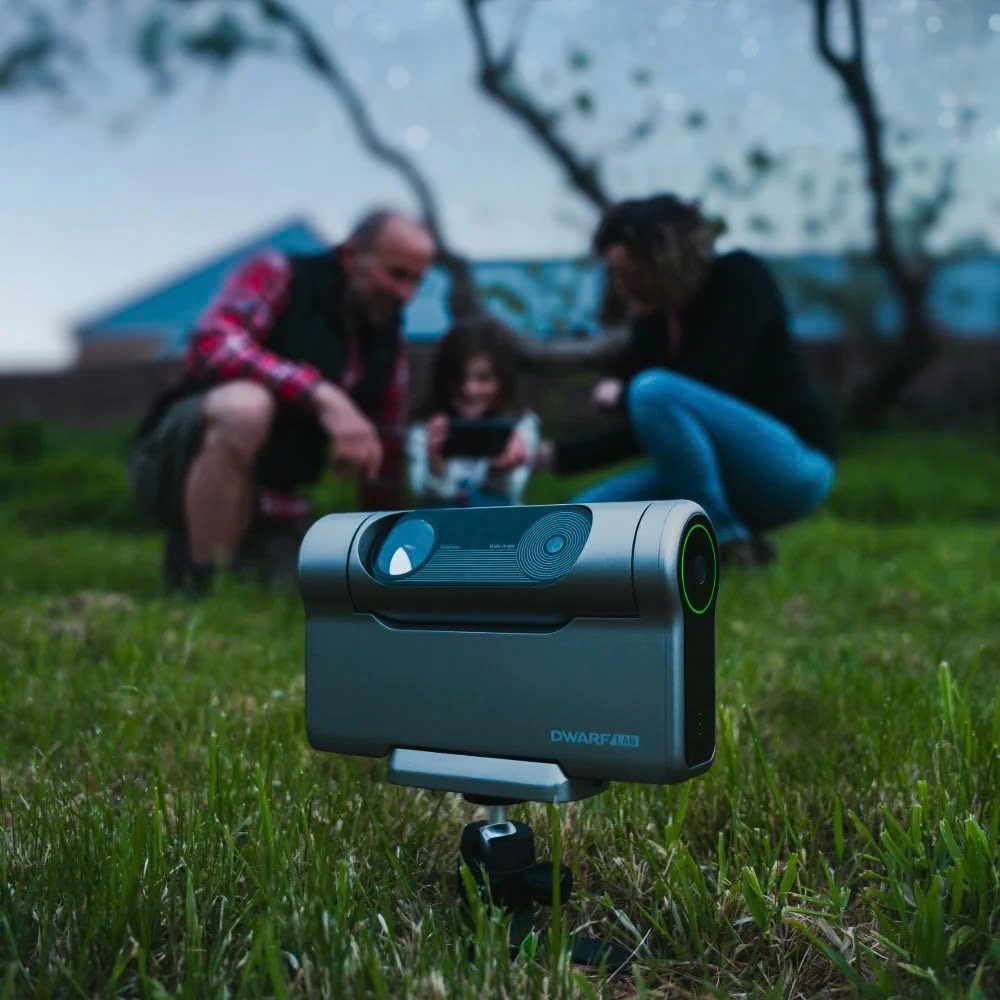
DwarfLab currently offers three smart telescopes. The DWARF II is the entry-level classic — a dual-camera system aimed at beginners wanting their first taste of astrophotography. It comes in Classic and Deluxe variants, with the Deluxe adding neutral-density solar filters, a UHC filter for light-polluted skies, a magnetic filter holder, and an extra battery. The unit is tiny enough to be held in one hand, powered by a 5,600mAh rechargeable battery that lasts around three hours per charge.
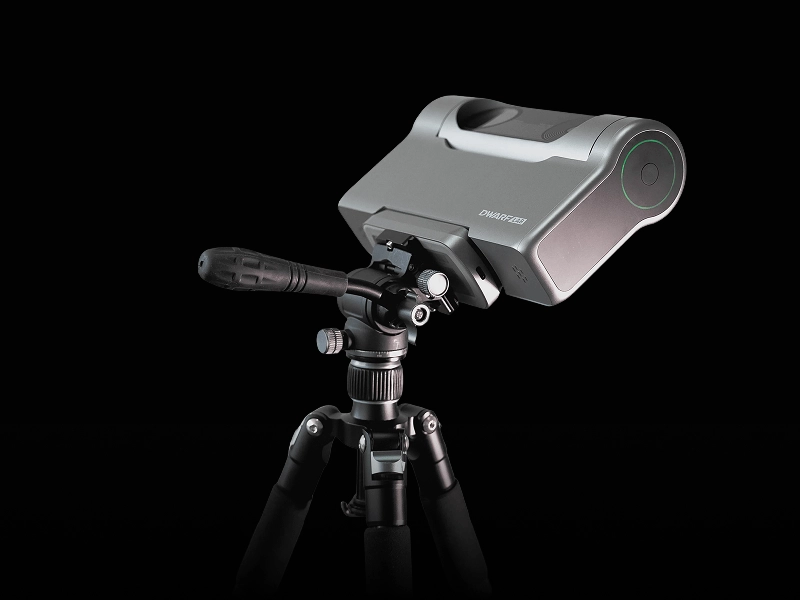
The DWARF 3 is DwarfLab's flagship — and the model most reviewers recommend. It weighs just 2.9 pounds (1.3 kg) and packs a 1.4-inch aperture telephoto lens with a 150mm focal length, paired with a wide-angle lens, and backed by a massive 128GB of built-in storage. Key upgrades over the DWARF II include a new equatorial (EQ) mode for reduced field rotation, improved sensors, new shooting modes, and built-in astro filters. In near-zero temperatures, the internal battery lasts over four hours on a single charge — impressive for this class of device. Price: $599.
https://dwarflab.com — Check the latest price on the DwarfLab DWARF 3

## The Dwarf Mini: World's Smallest Smart Telescope
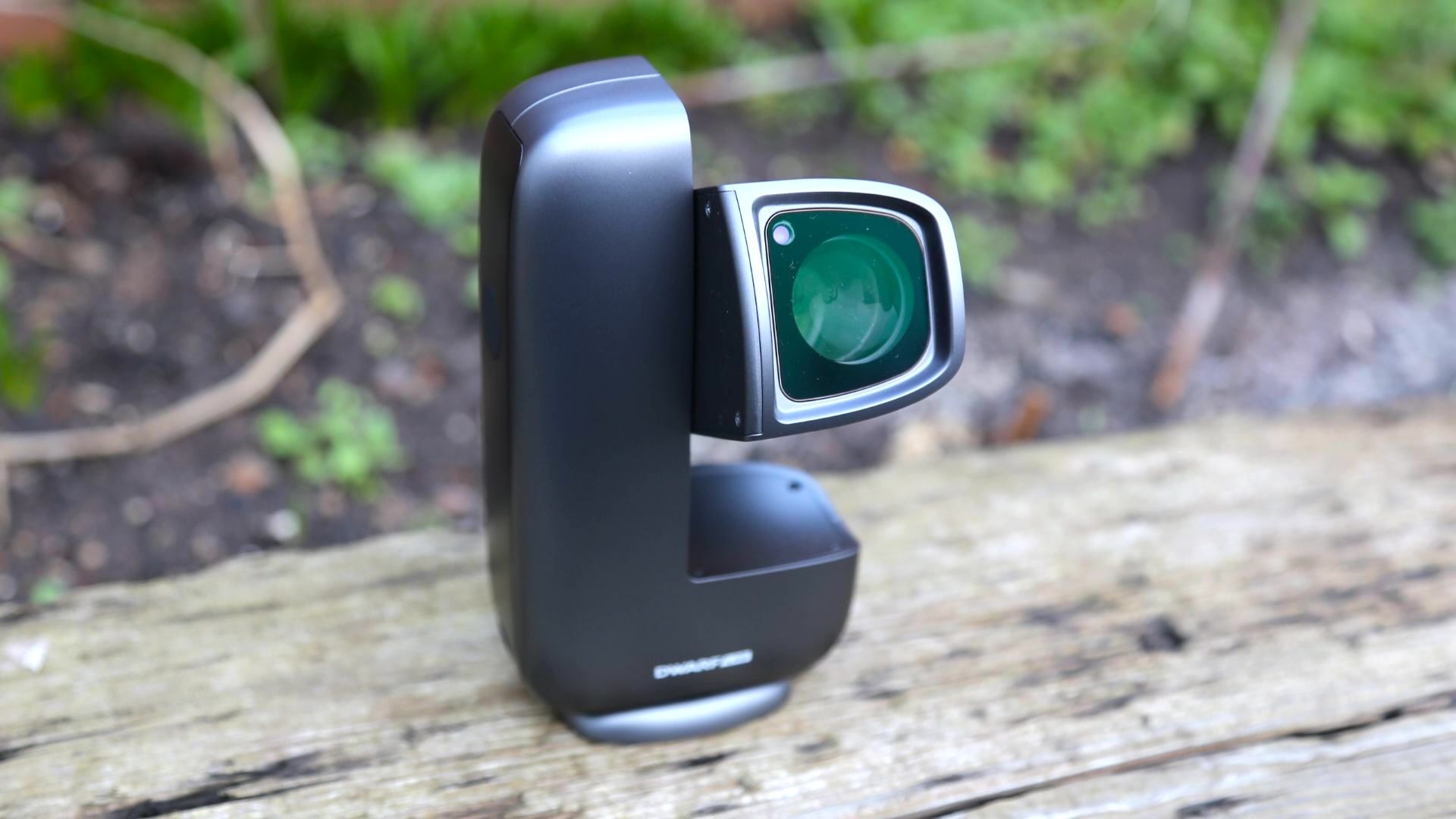
The newest addition to the DwarfLab family is the Dwarf Mini — currently the world's smallest smart telescope, weighing just 840 grams. Roughly the size of a chunky portable battery, it packs a Sony IMX662 sensor, a 30mm aperture with a 150mm f/5 telephoto lens, built-in filters, equatorial tracking mode, and a 7,000mAh battery — all in a form factor that fits in a coat pocket. It sells for $399, making it the most affordable entry point into the DwarfLab ecosystem.
The Dwarf Mini auto-calibrates on stars it detects, uses live stacking to reveal deep-sky objects invisible from light-polluted backyards, and saves FITS files for users who want to reprocess images later in PixInsight or Siril. For beginners, the entire workflow — from live stacking to a shareable final image — happens on your phone without touching a computer. Reviewers have described the experience as genuinely mind-blowing for a device this size.

## App Experience and Ease of Use
All DwarfLab telescopes connect to the DWARFLAB app via Wi-Fi (supporting both 2.4GHz and 5GHz) and Bluetooth. The app presents three imaging categories: General (daytime photos, video, timelapses), Solar System (Sun, Moon, planets), and Deep Sky (galaxies, nebulae, star clusters). Setup takes roughly one minute — power on, connect, download firmware if needed, and start shooting. The app includes a built-in star atlas with recommended targets for your location, real-time sky conditions, and automated scheduling features.
The main criticism: DwarfLab's official documentation is thin. There are no beginner tutorial videos on the company's website, and some users report spending hours reading the manual before capturing their first good image. YouTube community videos fill this gap, but DwarfLab should address this directly.
## Image Quality and Real-World Performance
For their price point, DwarfLab telescopes produce stunning results. The DWARF 3's Go-To function consistently centres deep-sky targets, tracking accuracy is excellent for keeping exposures sharp, and the built-in dual-band filter for emission nebulae opens up impressive imaging possibilities even from suburban skies. Solar imaging with the included magnetic solar filters produces detailed sunspot views. The DWARF 3 is best described as a wide-field instrument — it excels at nebulae and galaxies but isn't the right tool for planetary close-ups.
The Dwarf Mini, despite its smaller aperture, impresses with its ability to build up clean deep-sky images over time. The key principle: these telescopes trade aperture for time. Leave them running for an hour or two, and they accumulate enough data to rival results from much larger traditional setups. One reviewer captured a detailed Rosette Nebula image from a light-polluted urban environment — a feat that would have been impossible without the smart stacking system.
## Final Verdict: Is DwarfLab Worth It?
DwarfLab has firmly established itself as one of the best smart telescope brands on the market. The DWARF 3 is the sweet spot for most buyers — capable enough for serious hobbyists, simple enough for total beginners, and portable enough to take anywhere. The Dwarf Mini pushes portability even further at a lower price, while the DWARF II remains a solid entry point if found on sale. The main weaknesses are the software learning curve and sparse official tutorials — but the hardware quality, image results, and active user community more than compensate.
If you want to explore the universe without the traditional complexity and cost of astrophotography, DwarfLab is one of the best places to start in 2025.
https://dwarflab.com — Shop all DwarfLab telescopes and find the best deal
Popular Blog